
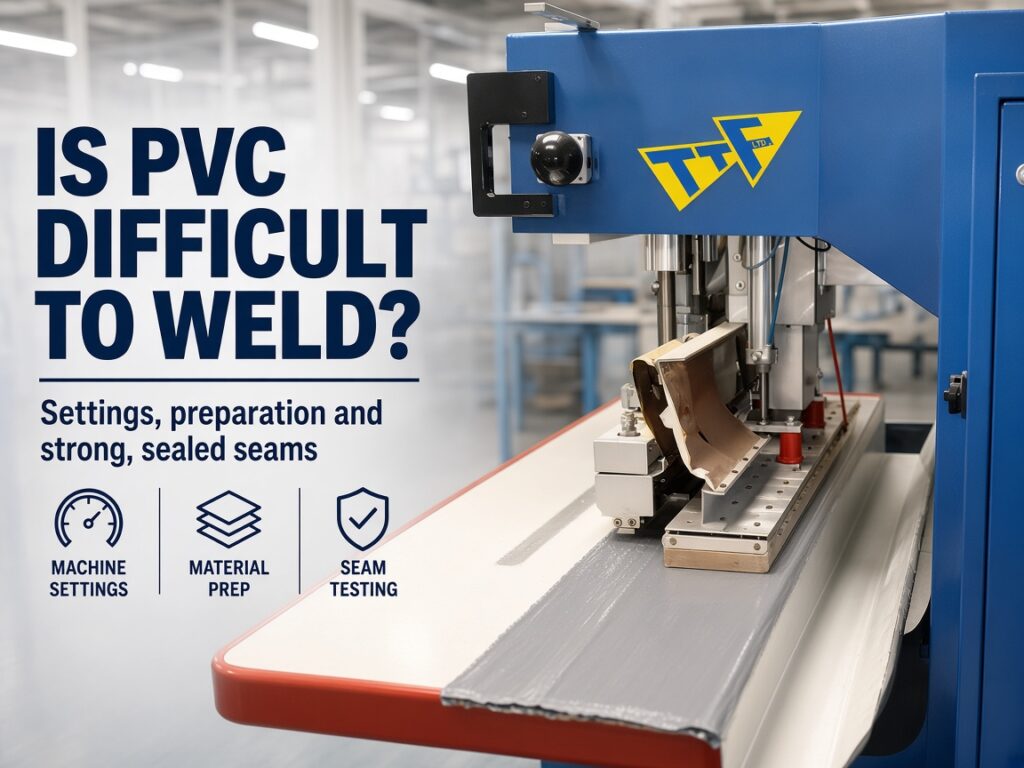
PVC is one of the most commonly used plastics in welding applications, but is it difficult to weld successfully? Well, the good news is that PVC is generally considered one of the easier materials to weld using suitable equipment, particularly when you are working with flexible PVC film or PVC-coated textiles. However, getting a strong, consistent weld still depends on choosing the right method, preparing the material correctly and controlling the welding process. If you work in textile manufacturing, plastic fabrication or garment accessories, understanding these factors can help you achieve better results and reduce production problems.
Is PVC easy to weld?
PVC can be relatively easy to weld because it responds well to several established plastic welding processes. But the level of difficulty depends on the type of PVC and the product you are manufacturing. Flexible PVC film, for example, is commonly used in High Frequency (HF) welding because it responds well to the electromagnetic energy generated by the machine. On the other hand, rigid PVC components may require a different welding technique, such as hot-air welding, depending on their shape and intended use.
Therefore, PVC itself is not necessarily difficult to weld. The challenge is selecting the correct process for the particular material.
Why is PVC suitable for HF welding?
High Frequency welding is widely used for suitable PVC materials because it generates heat within the material using a high-frequency electromagnetic field.
The machine applies pressure to the joining area, allowing the softened PVC layers to fuse together. The joint is then cooled under pressure to produce the finished weld. HF welding is particularly useful for products that require strong, sealed seams. Typical applications include:
- PVC-coated fabrics
- Waterproof bags and covers
- Tarpaulins
- Inflatable products
- Flexible plastic components
- Technical textiles
- Certain medical products
For manufacturers producing these types of products, HF welding can provide a repeatable process without relying on conventional stitching or adhesive drying.
What makes PVC difficult to weld?
Although PVC is generally suitable for welding, several factors can make the process more challenging.
1. Incorrect machine settings
The welding machine needs to be set up correctly for the material being processed. With HF welding, factors such as power, welding time, pressure and cooling time all affect the finished joint. Too little energy can produce an incomplete weld, while excessive energy can damage the PVC or create an uneven seam.
2. Different PVC formulations
PVC is available in many different formulations. Flexible PVC may contain plasticisers and other additives that influence its behaviour during welding. As a result, two PVC materials that look similar may not respond identically to the same machine settings. Testing the actual material before production is therefore important.
3. Dirty or contaminated surfaces
Dust, oils, surface coatings and certain printing or finishing products can interfere with the welding process. The material should be checked and prepared according to the requirements of the chosen welding method.
4. Incorrect pressure or alignment
If the material is not positioned correctly, the finished weld may be inconsistent. In HF welding, the electrodes must be correctly aligned and the pressure must be suitable for the product. Poor alignment can result in weak areas or uneven welding.
Is flexible PVC easier to weld than rigid PVC?
Flexible PVC is commonly used in HF welding because many flexible formulations respond well to the process. Rigid PVC, however, behaves differently because it contains little or no plasticiser. It is often processed using other techniques, depending on the application. This does not mean rigid PVC cannot be welded. It means that the material, equipment and process must be matched correctly. Before selecting a welding machine, consider whether you are working with flexible film, coated fabric, rigid sheet or a moulded component.
How can you achieve a strong PVC weld?
If you want to make PVC welding easier, concentrate on controlling the process rather than simply increasing the heat or power. The following steps can help:
- Check material compatibility: Confirm that the PVC grade is suitable for the selected welding method.
- Prepare the material: Keep joining surfaces clean and position the pieces accurately.
- Use suitable settings: Adjust the welding conditions to the material and product.
- Allow sufficient cooling: Follow the correct cooling cycle, particularly when using HF machinery.
- Test the finished seam: Check for consistent bonding and carry out suitable strength or leak tests where required.
These steps are especially important when you are manufacturing products in large quantities and need consistent results across a production run.
What happens if PVC is overheated?
Applying too much heat does not necessarily produce a stronger weld. Instead, excessive heat can cause PVC to discolour, distort or degrade. It may also damage the surrounding material and reduce the quality of the finished product.
With HF welding, the aim is to generate enough energy to achieve proper fusion without damaging the PVC. Machine settings should therefore be developed through controlled testing rather than adjusted randomly during production.
Appropriate ventilation, machine guarding and operator training are also important when working with plastic welding equipment.
Does PVC welding require specialist machinery?
The equipment you need depends on the product. Hot-air welding tools can be suitable for certain rigid PVC fabrication and repair tasks, while HF welding machinery is widely used for flexible PVC films and coated textiles.
For industrial production, specialist tooling can help create particular seam shapes, attachment points and repeatable weld patterns.
If you manufacture PVC-coated textile products, HF welding may be a suitable option when sealed seams and consistent production quality are important.
So, is PVC difficult to weld?
PVC is generally not considered difficult to weld when you use a suitable process and compatible material. In fact, it is one of the most established materials for HF welding.
The main challenges are controlling the welding conditions, understanding the PVC formulation and ensuring that the material is prepared and positioned correctly. For manufacturers working with flexible PVC and coated textiles, HF welding can make it possible to produce strong, repeatable and sealed joints. The key is to match the material to the machine and control the welding process carefully. With the right setup, PVC welding can be a reliable part of your manufacturing operation.